
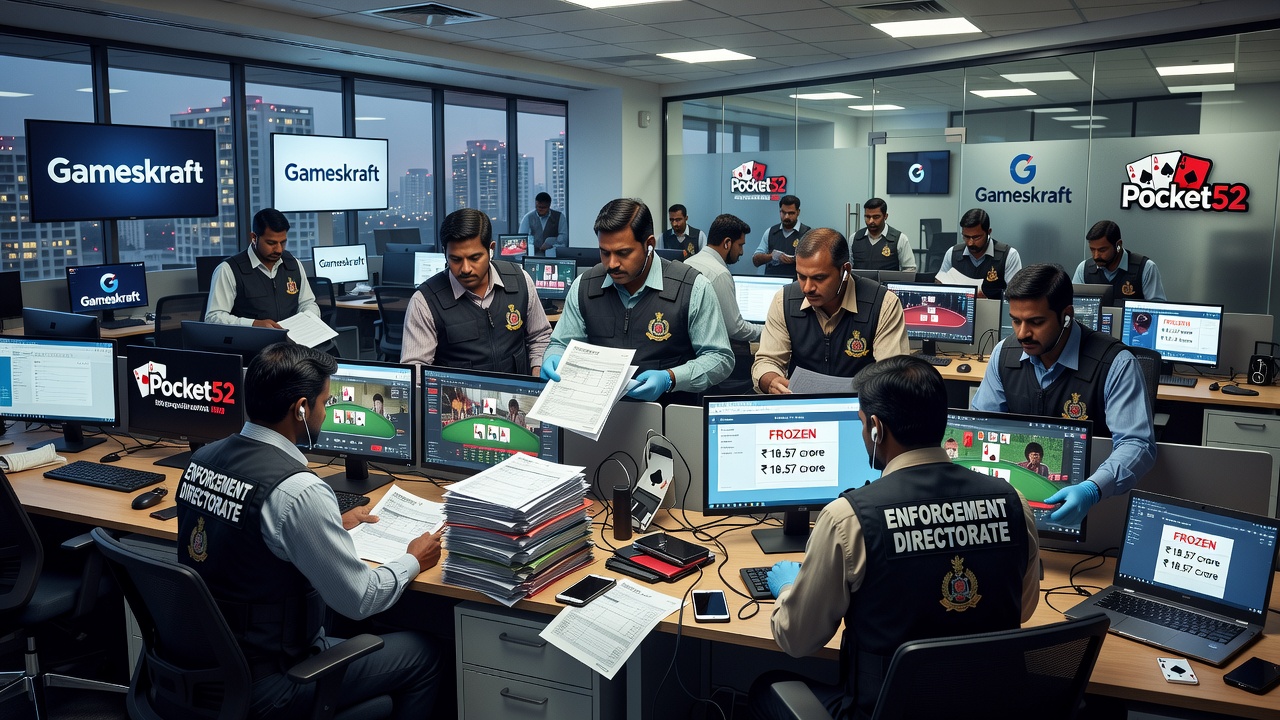
The Enforcement Directorate carried out coordinated search operations across Delhi-NCR, Bengaluru and other locations on Thursday, May 7, as part of a widening investigation into an alleged ₹1,000 crore money laundering case tied to online gaming and betting platforms. The action, led by the agency's Bengaluru Zonal Office, targeted M/s Gameskraft Technologies Pvt Ltd, its directors and several individuals allegedly connected to online betting operations.
Investigators reportedly seized documents, digital records and electronic devices during the raids, building on evidence already gathered in earlier phases of the probe. This is not the first time Gameskraft has come under ED scrutiny - a separate search operation last year examined different allegations against the company and its associated entities. The current case, officials say, is distinct, centred on fresh claims of laundering linked to online betting activity rather than the earlier matter. For readers unfamiliar with how live-dealer products operate within regulated and unregulated markets alike, resources explaining immersive roulette rules illustrate how digital wagering formats have grown increasingly sophisticated, a complexity that also makes financial tracing and compliance oversight more demanding for enforcement agencies.
The origins of the case trace back to multiple FIRs registered at local police stations in Bengaluru, which were subsequently transferred to the ED for investigation under the Prevention of Money Laundering Act. This handover pattern is common in India when alleged financial crimes cross state jurisdictions or involve sums large enough to trigger federal interest under PMLA provisions.
The Pocket52 Connection
Between November 18 and 22, 2025, the ED had already conducted searches in Bengaluru and Gurugram targeting premises linked to M/s Nirdesa Networks Pvt. Ltd. and Gameskraft Technologies, along with their directors. That investigation stemmed from FIRs filed by Karnataka Police alleging large-scale fraud on Pocket52, a gaming platform operated by NNPL. Complainants accused the platform of manipulating outcomes, permitting player collusion, restricting withdrawals and operating without adequate transparency. One complainant alone reportedly claimed losses exceeding ₹3 crore. Several users separately flagged concerns about algorithmic manipulation, alleging the platform exploited players without compensating losses.
Escrow Accounts and Regulatory Gaps
A central element of the case involves escrow accounts meant to safeguard user funds. Despite restrictions under the Online Gaming Promotion and Regulation Act, 2025, the ED found more than ₹30 crore sitting in escrow accounts that had not been returned to affected gamers and customers. The agency has since frozen eight escrow accounts holding roughly ₹18.57 crore, suspecting these funds represent proceeds of crime. Escrow mechanisms exist precisely to protect consumer money from misuse, so allegations that funds remained undisbursed despite regulatory intervention raise questions about how effectively such safeguards are monitored once platforms come under legal scrutiny.
Why This Matters Beyond One Company
Cases like this highlight the structural risks embedded in India's online gaming and betting ecosystem, where platforms often operate across ambiguous regulatory lines between skill-based gaming and betting. For users, unreturned funds and opaque algorithms underline why transparency and independent verification of game fairness matter more than promotional incentives. For regulators, the case tests whether newer frameworks like the PROG Act can meaningfully enforce fund protection once allegations surface. For the broader industry, it signals that enforcement agencies are prepared to pursue laundering charges alongside consumer fraud claims, tightening the compliance environment for gaming operators nationwide.