
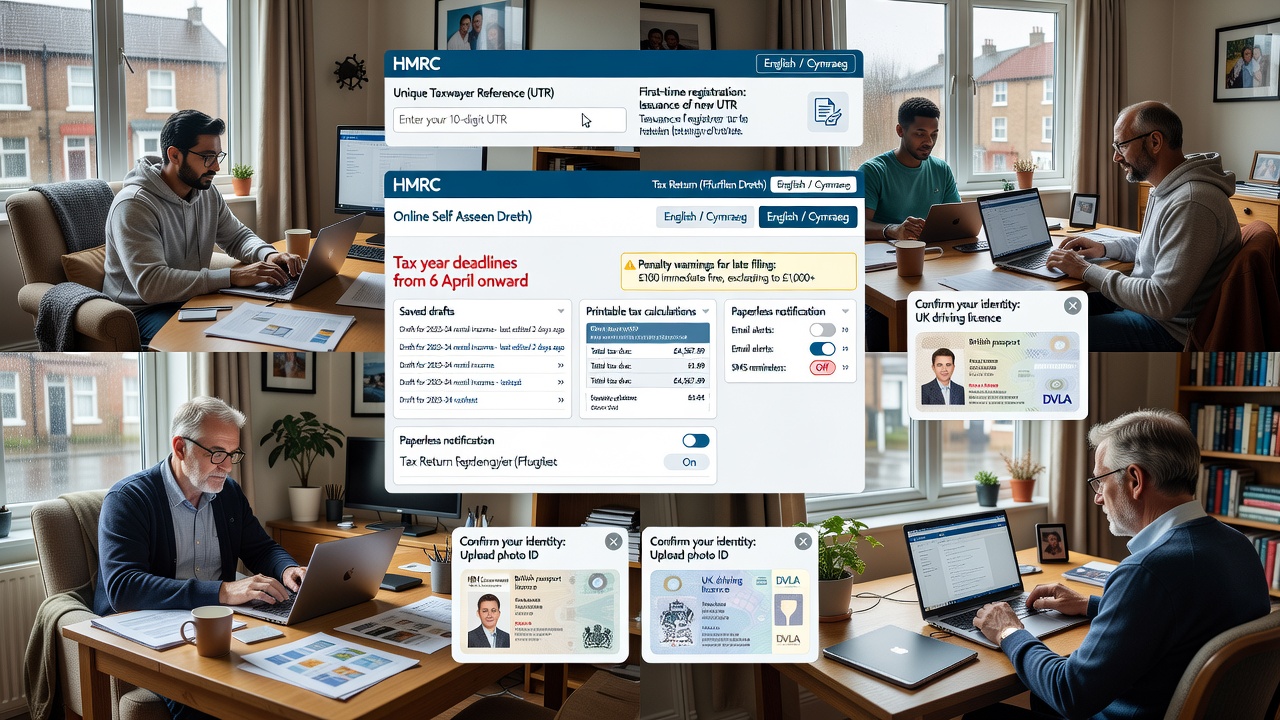
Millions of people in the UK who earn income outside standard payroll - the self-employed, landlords, and others with untaxed income - face an annual obligation to file a Self Assessment tax return. HMRC's online portal is the primary channel for meeting that duty, and understanding its rules, restrictions, and identity checks matters as much as knowing the filing deadline itself.
Who the online service is built for
The digital route is open to two broad groups: people who are self-employed, and those who are not self-employed but still owe a return, commonly because they receive rental income from a property. Returns can be filed any time from 6 April following the end of the relevant tax year, and missing the deadline triggers a penalty. Beyond submission, the same account gives users access to past returns, a summary of what they owe, a printable tax calculation, and the option to switch to paperless notifications - a small but meaningful shift toward reducing paper-based communication with HMRC. The service is also offered in Welsh, reflecting a standard bilingual requirement for UK public services.
First-time filers face an extra step
Anyone who did not file a return last year cannot simply log in and start typing. Registration for Self Assessment must happen first. This isn't a formality - HMRC needs to establish a taxpayer's status before issuing the Unique Taxpayer Reference (UTR) number required to file. Those who registered previously but have gone quiet may need to reactivate a dormant account rather than assume access still works. Skipping this step is a common cause of delay, since a return submitted without proper reactivation can stall in processing rather than being rejected outright, leaving filers uncertain about their status close to deadline.
Where the digital system stops
The online service has clear boundaries, and knowing them early avoids wasted effort. It cannot be used for partnership returns, by people who lived abroad as non-residents during the relevant period, or to report multiple chargeable event gains such as those arising from certain life insurance products. Income from a trust, Lloyd's underwriting activity, or work as a religious minister also falls outside its scope. Anyone in these categories must turn to commercial software or paper forms instead. For older obligations - specifically SA100 returns covering the 2020 to 2021 tax year or earlier - the relevant forms sit in the National Archives rather than on the live HMRC site, a detail easily missed by filers assuming everything recent is available through one portal.
Access, identity checks, and flexibility
Signing in requires a UTR number, and new users can create sign-in credentials if they don't already have them. Identity verification is built into the process for security reasons; HMRC may ask users to confirm who they are using photo ID such as a passport or driving licence before granting access. This reflects broader pressure across UK public and financial services to tighten identity assurance amid rising concern about account fraud and data misuse. One practical relief for filers: the return does not need to be completed in a single session. Entries can be saved and resumed later, which matters given that gathering income details, expenses, and supporting records often takes longer than a single sitting allows.