
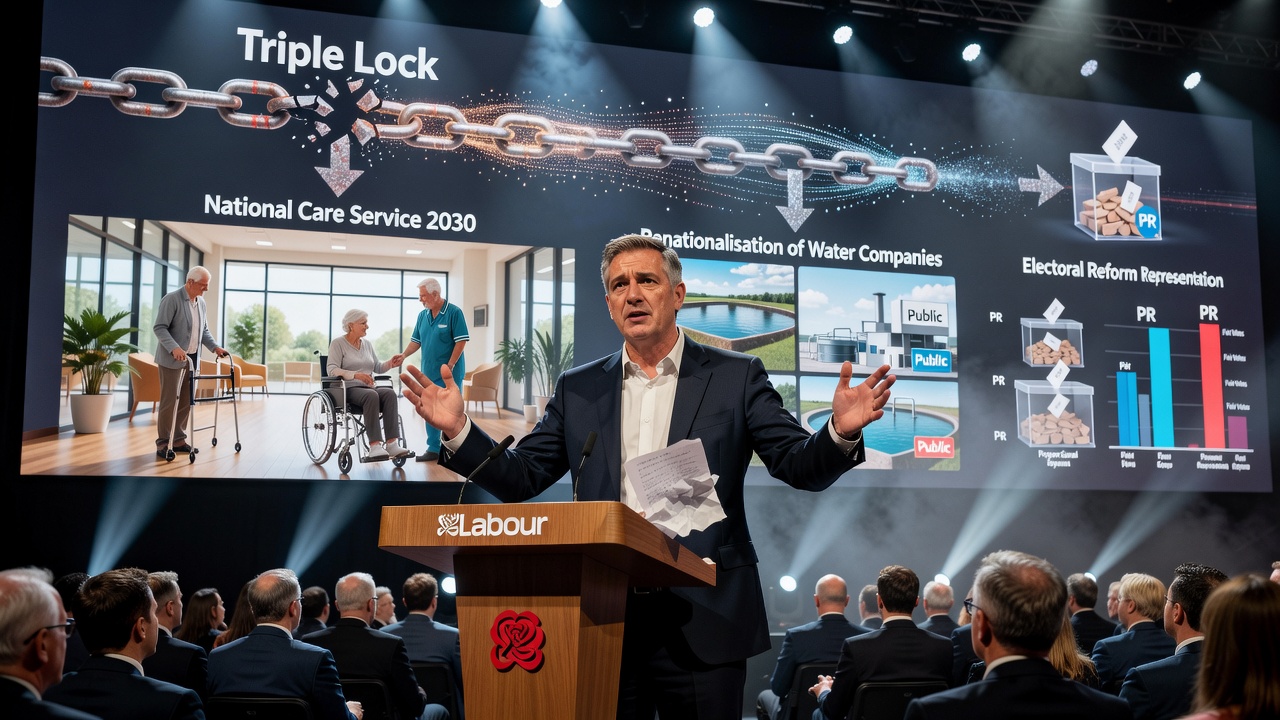
Andy Burnham used his first Labour conference speech as prime minister to announce the end of the pensions "triple lock," redirecting the savings toward a new national care service from 2030. The pledge, delivered in an emotional address referencing the recent death of his father, marks one of the most significant shifts in UK pension and welfare policy in over a decade. Delegates in Liverpool also heard proposals to lift the ban on public ownership of water companies and to reform the electoral system.
What the Triple Lock Change Actually Means
The triple lock has guaranteed that the state pension rises each year by whichever is highest: average earnings growth, inflation, or 2.5%. Introduced to protect pensioner incomes from erosion, it has become one of the most expensive commitments in the welfare budget, with successive governments under pressure to either preserve it fully or find a sustainable alternative. Burnham's announcement signals that preserving indefinite above-inflation pension growth is no longer compatible with funding other pressing needs, particularly adult social care, which has faced chronic underfunding and capacity shortfalls for years.
Framing the change around his father's death gave the policy a personal dimension rarely seen in fiscal announcements. The implicit argument: that pension spending should be rebalanced toward care services that directly affect quality of life in old age, rather than solely protecting the value of cash payments.
Why Redirecting Pension Savings Toward Care Is Contentious
Any move away from the triple lock will draw scrutiny from pensioner groups and opposition parties, who have historically treated the mechanism as politically untouchable. The core tension is intergenerational: working-age taxpayers fund the state pension, while reduced indexation could be presented as a fairer trade-off if it visibly improves care provision that pensioners themselves may eventually need.
The 2030 timeline suggests a phased transition rather than an immediate cut, giving government time to design the national care service and manage public expectations. Implementation details - eligibility, funding mechanisms, and how savings will be ring-fenced for care rather than absorbed into general spending - will determine whether the policy is seen as a genuine reform or a cost-cutting measure dressed in social purpose.
Water Ownership and Electoral Reform Add to a Crowded Agenda
Alongside pensions, Burnham proposed ending the ban on public ownership of water companies, a response to sustained public frustration over utility performance and pricing. He also floated changes to the UK's electoral system, a move that would require broad cross-party consensus and significant parliamentary time.
Taken together, the three announcements represent an attempt to define a distinct policy identity early in his premiership. Each carries structural risk: water renationalisation debates raise questions about compensation and market confidence, electoral reform touches the foundations of how governments are chosen, and pension changes affect household finances across the country. The reception among Labour MPs and members in Liverpool will shape how quickly, and how firmly, these proposals move from conference rhetoric to legislative reality.