
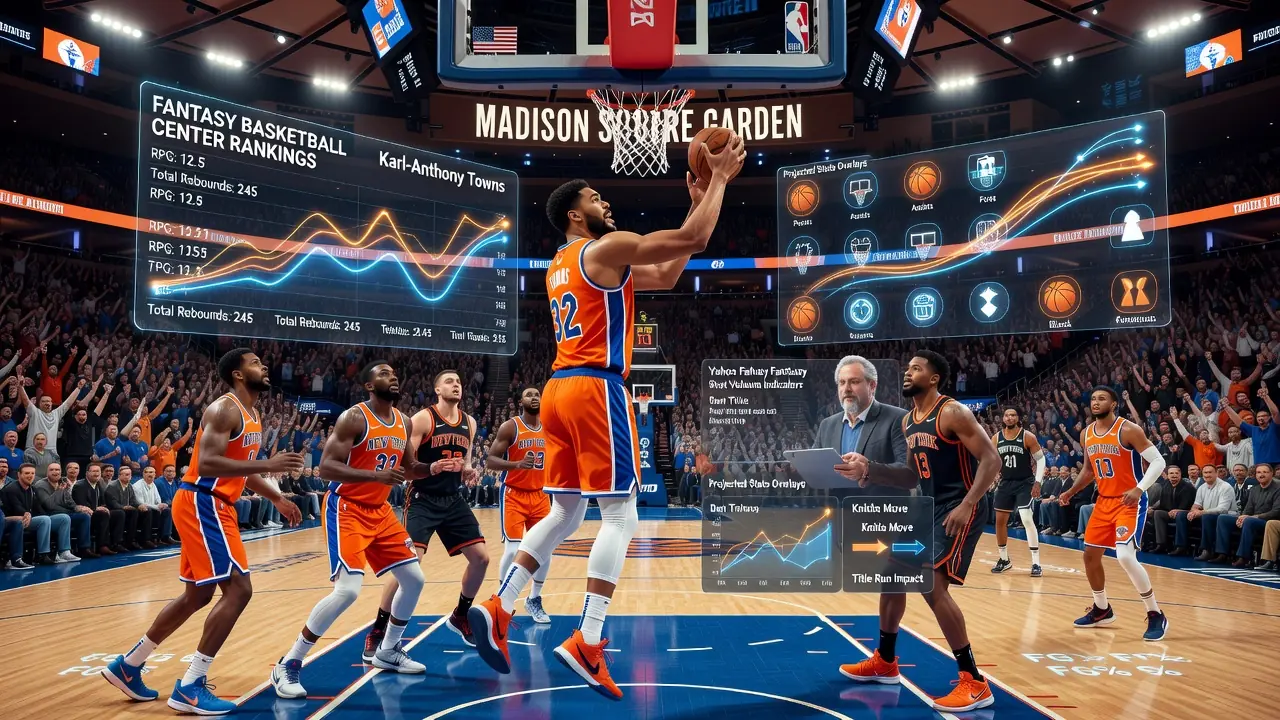
Karl-Anthony Towns enters the 2026-27 fantasy basketball season as one of the most discussed names at a position that quietly decides championships. His move to the New York Knicks and the deep playoff success that followed have reshaped how analysts view his value in nine-category leagues, a format where centers carry outsized weight because of their grip on rebounding totals.
Why Centers Still Decide Fantasy Leagues
Fantasy basketball's nine-category format rewards balance, but rebounds remain the one stat category where depth at a single position matters most. Point guards and wings can contribute across assists, steals, and three-pointers, yet few positions consistently deliver double-digit rebounding the way true centers do. That scarcity is why draft analysts, including Yahoo Fantasy's Dan Titus, treat center rankings as a living document rather than a one-time list. Player roles shift with coaching changes, injuries, and new team contexts, and a center's usage can swing dramatically based on offensive system and surrounding personnel.
Towns' New Context With the Knicks
Towns' fantasy profile has always combined rebounding with perimeter shooting, a rare blend for a big man. What changes this season is the environment. Playing for a Knicks team that reached a championship run alters expectations around shot volume, minutes management, and late-game usage, all of which factor into category production. Fantasy managers drafting Towns are not just betting on raw talent; they're weighing how a proven system, playoff-tested rotation, and coaching philosophy might stabilize or boost his counting stats compared to previous seasons spent elsewhere.
What Drafters Should Weigh Before Picking
Preseason rankings are directional, not predictive guarantees. Analysts build these lists using prior performance, projected role, and situational factors, but basketball outcomes carry inherent uncertainty, much like fantasy sports contests themselves. Treating any ranking as a sure path to winning a league ignores the variance built into player health, coaching decisions, and roster competition.
- Rebounding efficiency often depends on frontcourt pairing, not just individual skill.
- Minutes allocation on a deep playoff roster can be less predictable than on a rebuilding team.
- Category rankings should be updated throughout the season as roles solidify.
The Broader Fantasy Sports Landscape
Fantasy basketball sits at the intersection of entertainment and data analysis, and platforms like Yahoo have built entire ecosystems around rankings, waiver trends, and category strategy. These tools serve a largely skill-based, season-long format distinct from single-day paid contests, though both rely on transparent data and responsible platform design. As fantasy participation grows alongside broader sports betting markets, operators and analysts alike face increasing scrutiny over how projections are communicated, ensuring they're framed as informed estimates rather than promises of success.