
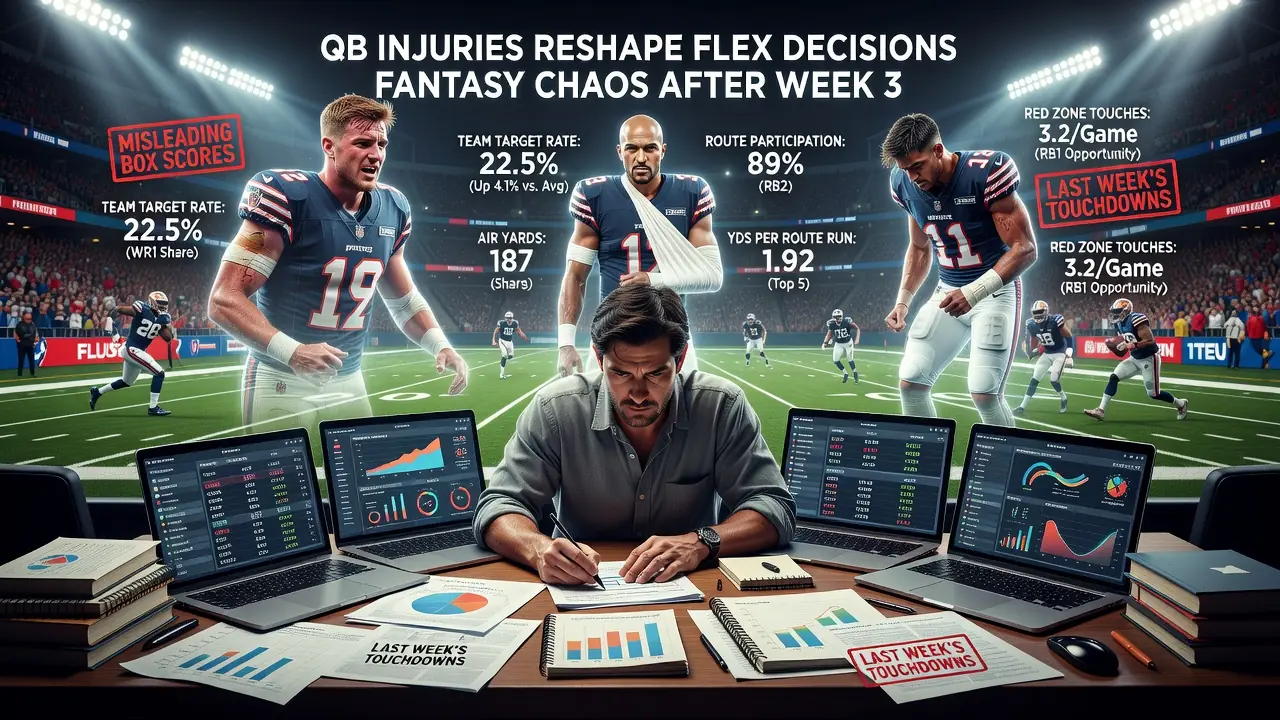
Eight quarterback injuries through three weeks of the NFL season have done more than scramble depth charts - they've quietly reshaped how fantasy football participants approach the Flex position. With Justin Herbert, Jalen Hurts and Drake Maye all underperforming preseason expectations, and bodies piling up at the league's most important position, the margin for finding a reliable 15-point producer has narrowed considerably. That scarcity is pushing fantasy managers toward deeper statistical analysis rather than name recognition alone.
Why Usage Data Matters More Than Box Scores
Traditional fantasy analysis leaned heavily on last week's results - touchdowns, yardage, final scores. But box scores are backward-looking and often misleading. Metrics like team target rate, air yards and route participation offer a forward-looking signal: they show how a coaching staff is actually deploying a player, independent of whether the ball happened to bounce favorably. A running back who sees heavy receiving work but modest carries, for instance, can still be a weekly starter in point-per-reception formats, even without the gaudy rushing totals fans traditionally associate with featured backs. This is the same logic that has pushed serious fantasy participants toward usage-based evaluation over simple game logs - it's a leading indicator rather than a lagging one.
The Quarterback Shortage Changes the Calculus
When starting quarterbacks go down, or established ones slump, the ripple effects reach every other position. Backup quarterbacks entering unfamiliar systems often lean on safer, shorter throws, which can inflate tight end and running back target shares while suppressing deep-ball opportunities for wide receivers. This season's wave of quarterback instability has made matchup analysis - which defense a team faces, how many pass attempts a backup quarterback is averaging, what sack and completion rates reveal about protection - more important than raw talent rankings. Streaming a lesser-known quarterback against a weak secondary has become a more defensible strategy than relying on a marquee name playing through adversity or facing a stout defense.
Reading Rookie Production in Context
Rookie wide receivers typically need time to acclimate to NFL-caliber coverage and route complexity, and this year is no exception. Comparing a rookie's early scoring pace to historical comparables at similar career stages provides useful context, preventing both excessive hype after one big game and unwarranted panic after a slow start. Patience, grounded in data rather than sentiment, tends to serve fantasy managers better than reactive roster moves.
A Numbers Game, Not a Guarantee
None of these metrics - target rate, yards per route run, red zone touches - predict outcomes with certainty. Football remains a sport where game script, injuries and matchups shift week to week, and fantasy football itself is ultimately a game of probability, not a system for guaranteed results. The value of usage data lies in narrowing uncertainty, not eliminating it. For fantasy managers navigating a season defined by quarterback instability, that distinction matters: smart roster decisions improve odds, they don't eliminate variance.