
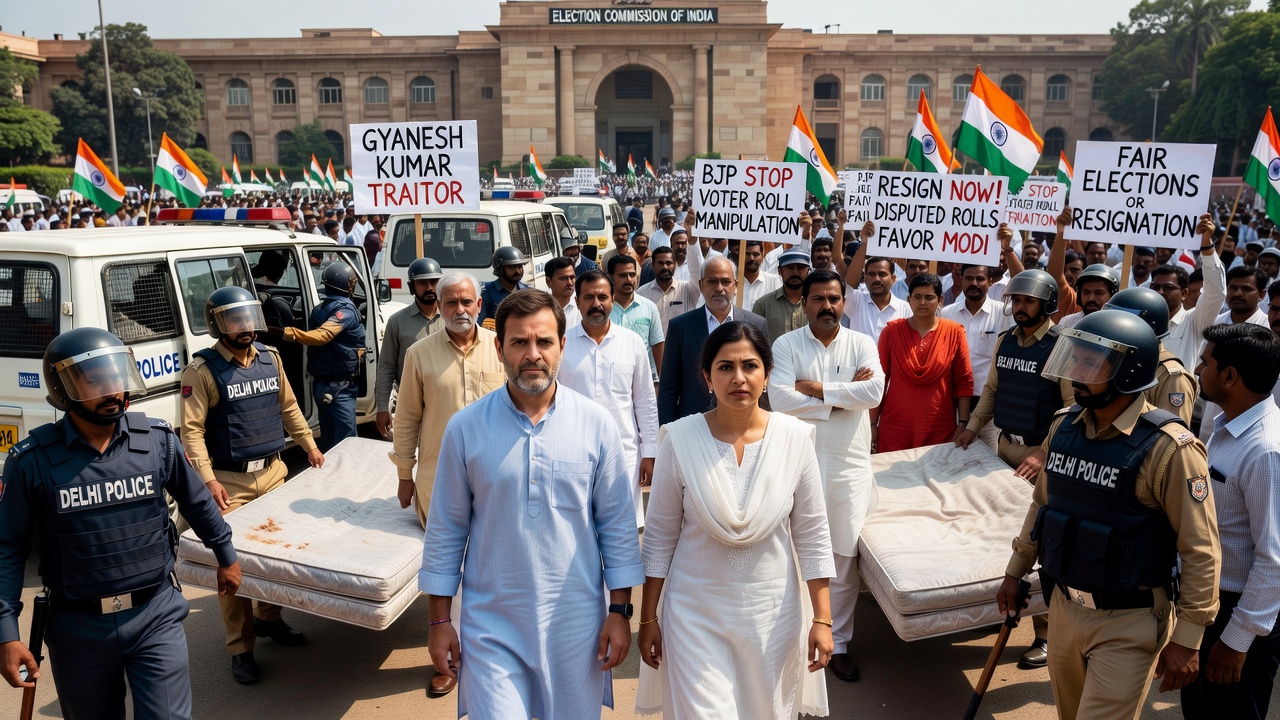
Delhi police dismantled an opposition sit-in outside the Election Commission of India's headquarters on Tuesday, briefly detaining Congress leader Rahul Gandhi, his sister Priyanka Vadra and other lawmakers. The confrontation capped a day of marches demanding the resignation of Chief Election Commissioner Gyanesh Kumar over allegations that voter list revisions were tilted to benefit Prime Minister Narendra Modi's government.
What triggered the standoff
The protests trace back to a newspaper report last month describing internal disagreements within the Election Commission over how voter rolls were being updated. Reuters has not independently verified that reporting, but the claims were enough to galvanize opposition parties and youth groups into near-daily demonstrations. Congress and its allies argue the revised lists work in the BJP's favor, a charge the ECI and the ruling party reject. Kumar himself has not addressed the allegations publicly.
Voter roll integrity sits at the center of any electoral system's legitimacy. When a body responsible for compiling and purging registration lists faces accusations of partisanship, the dispute quickly becomes about the credibility of the institution itself, not just the data. That is why opposition lawmakers framed their demand narrowly: a direct meeting with commissioners, not a negotiated statement through intermediaries.
How the day unfolded
Gandhi led roughly 300 lawmakers, by his own count, on a march from parliament to the ECI building, carrying placards and national flags while chanting against Kumar. Some signs branded the commissioner a traitor; others accused the BJP of stripping away voting rights. When barricades blocked entry to the commission's offices, the group staged a sit-in on mattresses in a compound next door, vowing to remain "as long as we have to."
The commission said late in the day that it had received a request to meet the lawmakers but that the proposed venue did not conform to ECI protocol. It offered to have an officer accept a written memorandum instead. The lawmakers declined. Hours later, hundreds of security personnel, some in riot gear, moved in and removed protesters to vehicles. Congress said those detained were subsequently released.
Why institutional trust matters here
Election commissions function as neutral referees, and that perception of neutrality is itself a form of public infrastructure. A commission led by a government appointee is standard practice in many democracies, India included, but it places extra weight on transparent procedures when disputes arise. BJP spokesperson Sudhanshu Trivedi dismissed the allegations as misleading, while the ECI has denied wrongdoing without engaging the specifics of the reported internal disagreements.
The episode lands at a politically sensitive moment for Modi, roughly midway through his third term. It follows a separate controversy earlier this year that led to the resignation of his education minister after exam paper leaks, suggesting a pattern of street-level pressure translating into institutional consequences. Whether this latest dispute produces a similar outcome, or simply fades into the cycle of daily protests that began last week, will depend on whether the Election Commission opens its process to outside scrutiny or continues to decline direct engagement with its critics.